Bella Baxter—Harry Astley
Poor ThingsBella Baxter and Harry Astley develop a relationship founded on frank conversation, moral disagreement, and mutual recognition rather than marriage. Astley offers Bella both philosophical counsel and a practical vision of reform, then twice seeks to marry her. She refuses him, but their final exchange reveals a tenderness beneath his cynicism: Bella sees his hostility to cruelty as genuine, even when he disguises it as hardness, and gives him one kiss before returning to Duncan Wedderburn. Her attachment to Astley matters because it brings her compassion and reforming purpose into direct contact with his distrust of idealism, without making her abandon her own choices.
Intellectual Companionship and Disagreement
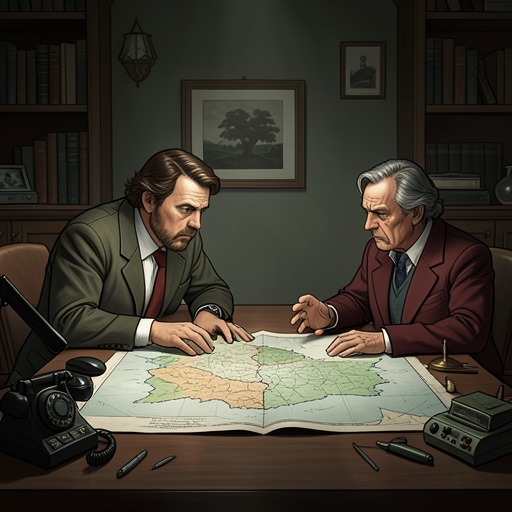
In her account of the voyage, Bella describes weeks of argument with Astley as her chief relief from the strain of thinking. Their conversations range across freedom, the soul, and the cruelty built into social life. Astley insists that cruelty toward the helpless will not end because the healthy prosper by trampling the vulnerable. Bella rejects the fatalism she hears in this claim: if that is how society works, she argues, people must stop living in that way. The disagreement is not a passing difference of opinion; it becomes the moral pressure shaping their intimacy.
Astley tries to support his pessimism with books, giving Bella Malthus’s An Essay on the Principle of Population, Darwin’s On the Origin of Species, and Winwood Reade’s The Martyrdom of Man. The reading leaves her head aching rather than reconciled to his conclusions. Their shared attention to these arguments nevertheless gives their relationship an intellectual closeness: he treats her as someone capable of confronting difficult ideas, while she refuses to let argument turn compassion into resignation.
Their closeness also develops through practical gestures. Bella changes a dressing on Astley’s injured hand. The wound bears a circular scar left by her teeth, and Astley observes that the mark will remain for life. He turns that lasting trace into an occasion to ask whether he may regard it as an engagement ring and whether she will marry him. Bella declines, explaining that she is already engaged to Archibald McCandless. Astley has guessed that she is not legally married to Wedderburn; after she tells him about her fiancé, he praises her as the purest aristocrat he has met, despite knowing women of rank and title. His proposal grows from close observation and esteem, but Bella’s answer is clear.
Astley’s Offer and Bella’s Refusal
The conflict between Astley’s cynicism and Bella’s compassion sharpens when she weeps over the suffering of the poor. At the ship’s rail, with the wake sliding away across moonlit water, Astley proposes that she marry him and have children. He points to his country estate, its farm, and its village, presenting them as the means by which she could care for his children and press him to improve the community’s drains and lower its rents. He frames the offer as a chance for an intelligent woman to be happy and do good in a grim world.
Bella recognizes the appeal and the danger in this proposal. She says she does not love Astley, and refuses what she regards as a particularly cunning inducement to a wholly selfish life. His offer would give her power to improve the lives around the estate, but would also bind her purpose to his household and marriage. Her refusal therefore holds two things together: she takes his proposed reforms seriously, yet will not accept marriage as the price of pursuing them.
After she declines, Astley asks her to hold his hand. In that brief contact, Bella feels that she has understood him more fully. Beneath his performance of strength, she sees a tortured, inwardly vulnerable person who hates cruelty as much as she does but pretends to accept it. She compares his internal poverty with that of her lost daughter, while distinguishing it from his comfortable outward circumstances. The contrast leads Bella to a political conclusion: people need the protective security of a good coat and money in their pockets, and she must become a Socialist. Their intimacy thus gives her neither a cure for suffering nor a reason to retreat from it; it clarifies the material conditions she believes compassion must address.
The Farewell Kiss and the Limits of Intimacy
At Gibraltar, Astley’s proposal returns in a more guarded form. Over breakfast, Bella anticipates that he is about to ask again and says she will marry only a world-improver. Astley sighs and warns her that men who speak of improving the world may use that language to entrap women like her: brave and kind women who feel generous toward the miserable, but also toward the cold, rich, and selfish. Bella is nearly overcome by his description, because it recognizes her character even as it cautions her against trusting reformist promises.
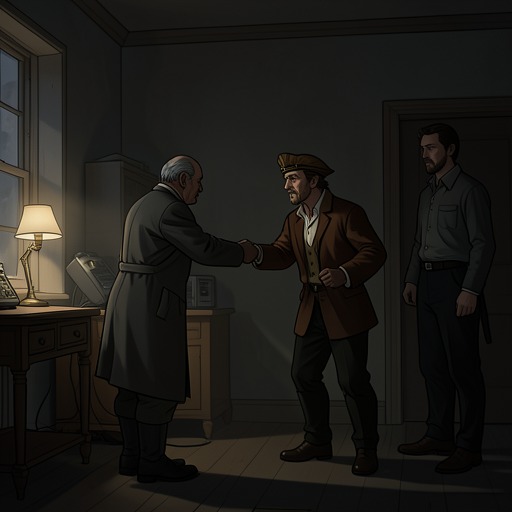
She asks Astley to stand. Although startled and surrounded by diners, he obeys immediately, standing straight like a soldier. Bella ties his arms to his sides with her own and kisses him until he trembles, then says goodbye and hurries upstairs to Wedderburn. The scene makes her affection unmistakable, but also marks its boundary. Bella describes this as the only kiss Astley received from her; she does not leave Wedderburn to join him, and she rejects the idea that talkers will trap her into a life she has not chosen.
Bella’s farewell does not undo her engagement to McCandless. She imagines returning to Glasgow and asking Godwin Baxter to help them work out how to improve the world, after which she and McCandless will marry and undertake that work together. Astley remains a serious interlocutor and a man for whom she feels tenderness, but not her chosen husband. The relationship’s defining tension is that each recognizes the other’s moral feeling while taking a different path: Astley offers reform through marriage and the power of his estate; Bella refuses that arrangement and carries her commitment to social improvement back to the life she intends to build with McCandless.